
Supporting equitable access to legal and regulated psychedelic medicine for all Canadians.
ABOUT OUR WORK
Working with partners in government, business, and the community, MAPS Canada is committed to advancing psychedelic medicine by supporting scientific, multidisciplinary research; advocating for drug policy reform; offering public education; and supporting equitable access to legal and regulated psychedelic medicine in Canada.


LATEST AT MAPS CANADA
October 29, 2026
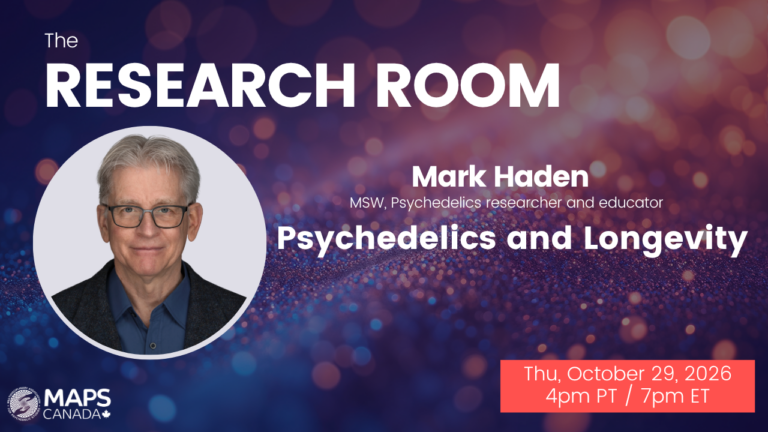
MAPS Canada presents:
Psychedelics and Longevity
Speaker Bio—Mark Haden is a leader in the field of psychedelic medicines, with a long list of past and present activities and responsibilities. Among—and beyond—these, he served as the Executive Director for MAPS Canada for 10 years and was an Adjunct Professor at the University of British Columbia School of Population and Public Health. He was the Clinical Supervisor for the psychedelic treatment program at Qi Integrated Health and is the vice president of business development at Clearmind Medicine. He is an instructor, teaching psychedelic therapy with the ATMA program, and has written a book, the Manual for Psychedelic Guides (now in its third edition), which makes this information widely available.
Mark has published numerous articles in respected journals, has presented at conferences and training events in many countries, and was awarded the Queen’s Diamond Jubilee Medal in 2013 for drug policy reform work. Mark also has a well-deserved reputation as an exciting speaker who never fails to engage and surprise audiences. You can read his latest publications and listen to his presentations here: www.markhaden.com
Talk Abstract:
Was it just a coincidence that Albert Hoffman – who invented LSD – and strongly believed in macrodosing – lived to be 102?
Longevity science has increasingly shifted its focus from extending lifespan to improving healthspan, the years lived in good physical, cognitive, and social health. While much research targets biological hallmarks of aging, emerging frameworks emphasize upstream psychosocial drivers such as chronic stress, trauma, social isolation, and health behavior. In parallel, research on psychedelic compounds (e.g., psilocybin, LSD, MDMA, and ayahuasca) suggests they can produce durable changes in mental health, behavior, and social functioning, with downstream physiological implications. Multiple mechanisms implicated in psychedelic effects, (e.g.,enhanced neuroplasticity, modulation of immune and inflammatory signaling, stress-response recalibration, and sustained improvements in psychological well-being and social connectedness) overlap with pathways influencing biological aging.
This narrative review examines the convergence of psychedelic research and longevity science, exploring how psychedelic-assisted interventions may influence aging trajectories through both direct biological and indirect psychosocial pathways. We also discuss safety issues and research priorities, including integrating biomarkers, functional outcomes, and longitudinal study designs, and consider whether psychedelic interventions may function as systems-level catalysts for healthier aging.
October 25, 2026, Rio Theatre, Vancouver, BC
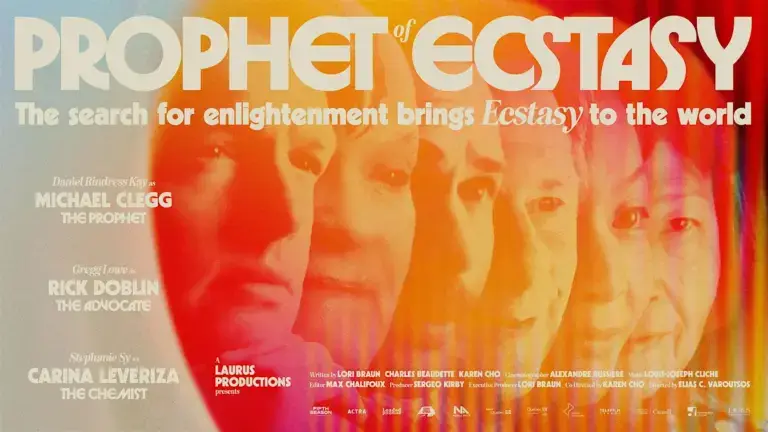
MAPS Canada is hosting with Laurus Productions :
Prophet of Ecstasy—with Rick Doblin—Vancouver Screening
PROPHET OF ECSTASY, the stranger-than-fiction story of how MDMA became the club drug of the century, its 30-year fight for decriminalization, and the science of the drug as a tool in mental health care.
October 23-25, 2026, Vancouver, BC
MAPS Canada is a community partner:
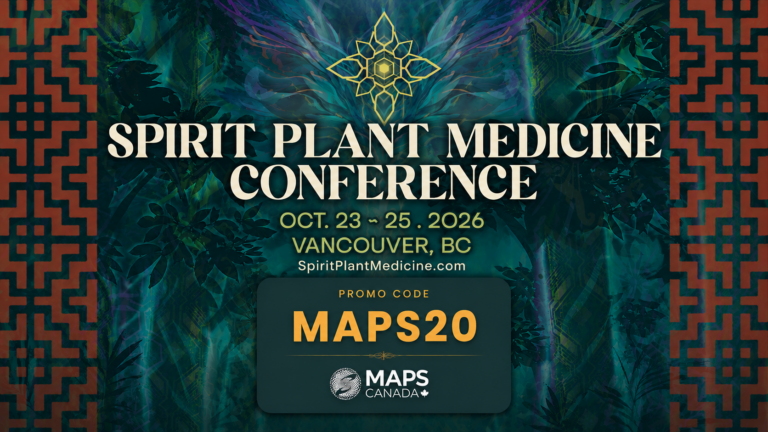
Spirit Plant Medicine Conference 2026
Taking place October 23rd through 25th, the Spirit Plant Medicine Conference is an educational community gathering focused on plant medicine culture, science, ethics, and right relationship.
Get 20% off with MAPS Canada Affiliate Discount Code: MAPS20
October 16, 2026
MAPS Canada presents:
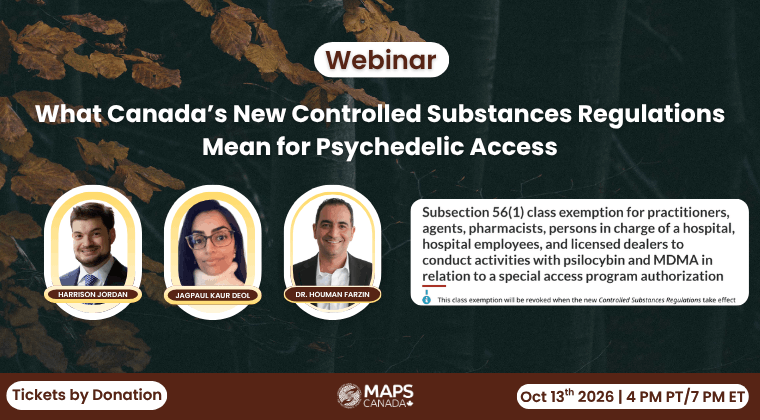
What Canada’s New Controlled Substances Regulations Mean for Psychedelic Access
Learn what regulatory changes do (and do not) mean for psychedelic access, professional scope of practice, and patient care in Canada.
Canada’s new Controlled Substances Regulations mark an important shift in how controlled substances are regulated nationally. But what do these changes actually mean for patients, practitioners, pharmacists, clinics, and the future of psychedelic-assisted therapy?
Join our panel as we unpack what changes are in place for psilocybin and MDMA (and other psychedelics!) authorization through the Special Access Program, and what remains unchanged. We’ll also explore the general practical implications for SAP prescribing, possession, storage, transportation, administration, drug accountability, and professional scope. And what the new framework and private member bills could mean for future psychedelic access in Canada.
Objectives:
- Describe the key changes introduced by Canada’s new Controlled Substances Regulations effective October 1, 2026.
- Identify practical implications for healthcare professionals, including possession, storage, transportation, administration, and drug accountability.
- Recognize what the regulatory changes do (and do not) mean for psychedelic access, professional scope of practice, and patient care in Canada.
- Discuss proposed Private Members’ Bills and other legislative proposals and their potential implications for psychedelic access in Canada.
October 9, 2026
MAPS Canada presents:
The Relational Nature of Psychedelics: Indigenous Knowledge & Healing with Dr. Keith Williams
Healing is often understood through the individual experience, but what might we learn by centring Indigenous perspectives on the deeply relational nature of psychedelic healing?
In this episode of the MAPS Canada Podcast, host Matt Hamel speaks with Dr. Keith Williams, an associate professor at Athabasca University and psychedelic researcher with training in psychedelic-assisted therapy. Dr. Williams has worked with Indigenous and local communities across Canada and around the world on plant-related projects, with a particular focus on the traditional uses of food and medicine plants.
The conversation explores on a paper Dr. Williams co-authored in the Journal of Psychedelic Studies, exploring inner healing intelligence through the lenses of critical vitalism and Indigenous thought. Dr. Williams lives in Mi’kma’ki (Nova Scotia) and has paternal family roots from a Mohawk (Haudenosaunee) community on the northern shores of Lake Ontario. Although he does not identify as Indigenous, Dr. Williams draws on Indigenous thought, traditional botanical knowledge, and his own experiences working with communities and the land. He explains how psychedelic-assisted therapy might be understood through a more relational and place-based framework.
Dr. Williams also discusses the risks of extracting or appropriating Indigenous practices and knowledge into Western psychedelic therapy, and why Indigenous knowledge should instead be recognized on its own terms and treated as a philosophical and epistemological partner. He considers what it might look like for practitioners to establish deeper relationships with the medicines, lands, and communities where they live, rather than simply incorporating isolated elements of Indigenous traditions into existing therapeutic models. Dr. Williams also shares his vision for a future of psychedelic-assisted therapy that embraces multiple ways of knowing while fostering reciprocity, connection, and a deeper sense of place.
To access the paper discussed in this episode, visit: https://www.akjournals.com/view/journals/2054/10/1/article-p59.xml
If you would like to connect with Dr. Keith Williams, he can be reached at: kwilliams@athabascau.ca
September, 29, 2026
MAPS Canada presents:
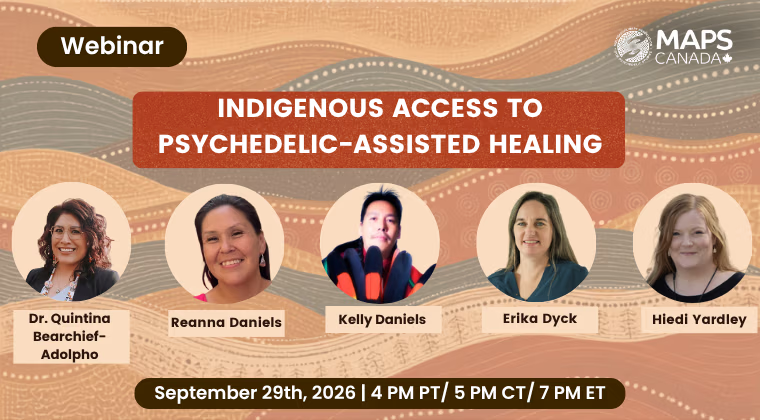
Indigenous Access to Psychedelic-Assisted Healing
This webinar will explore the connection between Indigenous healing traditions, the Native American Church, and access to PAT in Canada.
This webinar will explore the connection between Indigenous healing traditions, the Native American Church, and the emerging field of psychedelic-assisted therapy (PAT) in Canada.
Indigenous communities have long-standing relationships with plant medicines, ceremony, and holistic healing frameworks currently in use that predate and in many ways anticipate what Western clinical models are now acknowledging and rediscovering.
In relation to regulated PAT, Indigenous communities face distinct and compounding barriers to access: geographic isolation, jurisdictional gaps in funding, a legacy of medical mistrust rooted in colonial healthcare harms, and a workforce that is unprepared to support Indigenous cultural safety.
Through stories, teachings, discussion and song, this session will bring together clinical, cultural, and policy perspectives to examine how psychedelics are being utilized for healing, and how collaboration is essential to bridge connection and learning.
Objectives:
- Learn about different approaches to Indigenous psychedelic-assisted healing
- Describe how traditional healing practices inform and align with contemporary psychedelic-assisted therapy models.
- Explore the components of Indigenous psychedelic-assisted healing
- Understand the historical and legal context of these practices
- Identify barriers to access to different practices for different individuals and communities
September 25, 2026
MAPS Canada presents:
Access to Psychedelic Care in Indigenous Communities with Dr. Leah Mayo
September 24, 2026
MAPS Canada presents:
Indigenous Cultural Safety in Psychedelic-Assisted Therapy
Speaker Bio—Lakoda Thomas is a PhD student in the Clinical Psychology program at the University of British Columbia Okanagan. She is of Plains Cree and Ukrainian settler ancestry. Her ancestral lands are on Treaty 6 Territory, and she is a member of the Pelican Lake First Nation. Lakoda obtained her BSc (Hons) and MA from the University of British Columbia; she is supervised by Dr. Zach Walsh. The qualitative research conducted for her MA thesis identified factors that may be vital to enhance the safety of psychedelic assisted therapy for Indigenous populations. Lakoda’s work aims to harmonize clinical and Indigenous models of health to optimize therapeutic interventions for Indigenous and non-Indigenous clients alike.
Talk Abstract:
Indigenous Peoples in North America face distinct barriers to accessing mental health care, including psychedelic assisted therapy (PAT). Although PAT has demonstrated efficacy for treatment-resistant mental health disorders, limited diversity in psychedelic research and the importance of set and setting highlight the need for Indigenous cultural safety (ICS), an approach to care that is respectful, culturally responsive, and reduces the incidence of racism and discrimination. However, to date, factors that promote ICS in PAT have not been systematically examined.
Using a qualitative design informed by postcolonial theory and Two-Eyed Seeing, 10 semi-structured interviews were conducted with experts in Indigenous mental health and psychedelic therapy. Data were analyzed using reflexive thematic analysis within a dual epistemological framework integrating constructivism and critical realism.
Four interconnected themes described the conditions required to support ICS in PAT across foundational, conceptual, applied, and structural levels.
The themes include: 1) Contextualizing Cultural Safety
2) Conceptualizing Culturally Aligned Psychedelic Care
3) Co-creating Culturally Aligned Psychedelic Care
4) Systemic Factors Impacting Accessibility
Findings suggest that achieving ICS in PAT requires a broader model of culturally aligned psychedelic care that builds upon the foundational principles of ICS, while remaining sufficiently flexible to address the unique therapeutic context of PAT. The project speaks to the conditions that are required for psychedelic care to become culturally aligned, ethically governed, and genuinely accessible for Indigenous communities. Culturally aligned psychedelic care cannot be achieved through isolated cultural adaptations to existing PAT protocols; it requires changes at the interpersonal, therapeutic, conceptual, and systemic levels.
Ultimately, a culturally aligned psychedelic model will be grounded in the foundational safety elements of psychedelic care, while maintaining sufficient flexibility to be adaptable to the needs of diverse Indigenous individuals and communities.
August 28, 2026
MAPS Canada position paper on:
Rethinking Psychedelic Access in Canada with TheraPsil CEO Spencer Hawkswell
What happens when psychedelic research moves beyond the traditional pharmaceutical model and becomes more patient-centred, grassroots, and responsive to the realities of how people are actually accessing these therapies?
In this episode of the podcast, host and MAPS Canada Executive Director Dr. Rielle Capler speaks with Spencer Hawkswell, CEO and President of TheraPsil, about the evolving landscape of psychedelic research, access, and policy in Canada. Spencer discusses innovative approaches to clinical research, including a participant-funded psilocybin trial focused on wellness, group-based treatment models, and the potential to develop more accessible research pathways for psychedelic therapies. They also explore the challenges created by conventional clinical-trial models and the importance of generating evidence that reflects the needs and experiences of patients.
The conversation also examines the realities of psychedelic access outside formal legal pathways, the role of professional training and harm reduction, and the potential for observational and qualitative research to better understand how Canadians are using psychedelics in the real world. Rielle and Spencer discuss psychedelic-assisted approaches to end-of-life distress, the relationship between psilocybin and MAID, and the role of patient advocacy, public education, and policy reform in shaping the future of psychedelic access in Canada. Together, they consider how research, clinical practice, and grassroots advocacy can work alongside one another to build safer and more accessible pathways to psychedelic care.
August 25, 2026
MAPS Canada position paper on:
The Role of Psychedelic-Assisted Therapy in Medical Assistance in Dying
August 21, 2026
MAPS Canada presents:
Bringing Psychedelic Research to the Rave with Rachel Simon
What can we learn about psychedelics by studying how people actually use them in the real world?
In this episode of the MAPS Canada Podcast, host Matt Hamel speaks with psychedelic researcher and MAPS Canada volunteer Rachel Simon about her research investigating psychedelic use in music festival and rave environments.
Rachel recently completed her Master’s of Science in Psychology at McMaster University, where her research explored the mechanisms underlying long-term change following psychedelic experiences. After encountering challenges recruiting participants through clinical settings, Rachel began asking a different question: why not conduct psychedelic research where people are actually using psychedelics?
This led to a naturalistic, longitudinal research initiative taking place at music festivals across Canada, including Shambhala Music Festival in British Columbia and VELD in Toronto. Rachel also shares some of the creative approaches she has taken to recruiting participants, including using QR codes on bracelets and festival totems, and explains how being a festival attendee herself helped her develop a more natural and authentic approach to engaging participants.
The conversation also looks toward the future of naturalistic psychedelic research, including Rachel’s vision for developing dedicated research hubs at music festivals and expanding the study of psychedelic use beyond the traditional clinical setting.
To connect with Rachel or to learn more about her research, Rachel can be reached on LinkedIn and via email: simonr1@mcmaster.ca
July 31, 2026
MAPS Canada presents:
Eating Disorders, Psychedelics and Targeting Cognitive Rigidity with Shel Scott
In this episode of the MAPS Canada Podcast, host Matt Hamel speaks with occupational therapist Shel Scott about the emerging role of psychedelic-assisted therapy in the treatment of eating disorders. Drawing from her unique perspective as both an eating disorder survivor and a mental health clinician, Shel explores why eating disorders remain among the most challenging psychiatric conditions to treat, and where psychedelic medicines may offer new therapeutic possibilities. Beyond the clinical discussion, Shel shares her own recovery journey and reflects on how lived experience shapes her therapeutic approach. The episode also explores Shel’s work in psychedelic policy and research through MAPS Canada’s EXPAND Study, highlighting ongoing efforts to improve access to evidence-based psychedelic therapies through Canada’s Special Access Program. To learn more about Shel’s clinical practice, visit Prevailing minds.
Learn more about MAPS Canada’s Community of Practice (CoP) & learn more about MAPS Canada’s research initiatives, such as the EXPAND Study.
July 24, 2026
MAPS Canada presents:
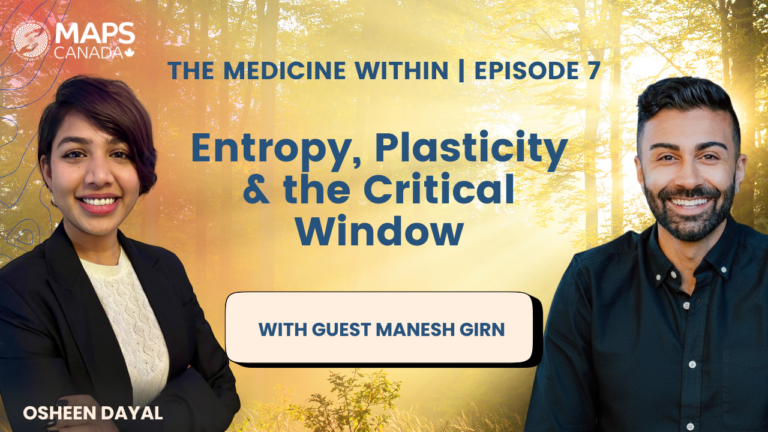
The Medicine Within | Ep. 7: Entropy, Plasticity & the Critical Window Period with Dr. Manesh Girn
In this final episode of the Medicine Within series, neuroscientist Dr. Manesh Girn (The Psychedelic Scientist) joins us to unpack what happens in the brain after a psychedelic experience. Together, we explore:
- What actually happens in the brain after a psychedelic journey
- Neuroplasticity and how psychedelics support lasting change
- The science of entropy and altered states of consciousness
- The “critical window” after a psychedelic experience—and why it matters
- Whether different psychedelics create different windows for change
- Why it’s not just serotonergic psychedelics that can enhance neuroplasticity
- Whether cannabis is a psychedelic

June 15, 2026
MAPS Canada presents:
Executive Summary of the National Dialogue on Psychedelic Access
Experts Call for Urgent Action on Psychedelic Access in Canada
In April 2026, MAPS Canada convened the first-ever National Dialogue on Access to Psychedelics, bringing together clinicians, researchers, policymakers, Indigenous knowledge holders, legal experts, community and business leaders, advocates, veterans, and people with lived experience to examine the future of psychedelic access in Canada.
The dialogue comes at a pivotal moment. Growing evidence supports the potential of psychedelic-assisted therapies for conditions including post-traumatic stress disorder (PTSD), depression, substance use disorders, and end-of-life distress. At the same time, public interest and demand for these treatments continue to increase – as do recent and upcoming legislative proposals signalling growing political attention to this emerging field.
Read this Executive Summary highlighting key findings, priority areas, and calls to action emerging from the National Dialogue. The summary is intended to inform ongoing discussions and policy development ahead of the release of the full report.